Fire Extinguishers in the News

September 9, 2008 by  
Filed under In the News

Fire ExtinguishersFire extinguishers are so much part of our lives these days, it’s hardly headline-grabbing news when one is set off or used. However, even the humble fire extinguisher has had its moments of glory…

Formula One

To suffer one engine fire in your car is unfortunate, to have two… French Formula One driver Sebastien Bourdais managed to cross the chequered flag in 18th place in the Hungarian Grand prix, despite two flash fires during refuelling. It wasn’t the fires that slowed him down however, it was having to make a third pit stop to have fire extinguisher foam removed from the inside of his visor…

Think Before You Speak

Award for this year’s most inappropriate use of the phrase “Fire Extinguisher” must go to US press secretary Dana Perino. In May 2008, the White House announced that it would not sell crude oil from the US Strategic Petroleum Reserve to boost supply and lower prices. Perino described the oil reserve thus: “It’s like the fire extinguisher in case of an emergency.”

If they are putting out fires with oil in the US, Houston, they have a problem!

Olympic Torch

The world-wide progress of the 2008 Beijing Olympic torch procession was not the smooth-running exercise the Chinese organizers had hoped for. In London, over 35 people were arrested for trying to obstruct the torch procession.

After two men had tried to put out the torch with a fire extinguisher, the torch-protecting authorities decided that it was safer on a double-decker bus. A large naked flame, in a large metal ice-cream cone, on a London bus. Hmmm.

Fire Training Nigerian Style

A second electrical fire at the Ministry of Foreign Affairs in Nigeria in September 2008 shows the importance of fire safety maintenance – and training. When the office’s electrical control room burst into flames, according to the Nigerian newspaper “Business Today”, the civil defense corps allegedly, “Ran away from the scene instead of deploying the disaster management training they are reputed to have gained.”

Quick-thinking security staff grabbed the nearest fire extinguishers, only to discover they were empty. So, one guard ran to a nearby building and borrowed one of their extinguishers instead. It was almost an hour before a ‘rapid intervention’ fire truck arrived, finally putting out the fire.

Whilst praising those quick-acting security staff, Minister of Foreign Affairs Chief Ojo Maduekwe was generally not amused; “The response to the incident was reasonably above average and there can still be improvement.”

Absolutely, Minister!

And Finally…

A German anti-smoker was so annoyed when his girlfriend lit up a cigarette in his flat, that he set off a fire extinguisher to extinguish it. The resulting powder covered her, him and most of the flat by the time the police arrived to the flat, in the town of Bielefeld.

With due concern for fire safety, a police spokesman explained how “It looked like a bomb had gone off in there… He managed to put the cigarette out though.” The anti-smoker is now single, again.

Know Your Smoke Alarms

September 9, 2008 by  
Filed under Fire Safety at Home

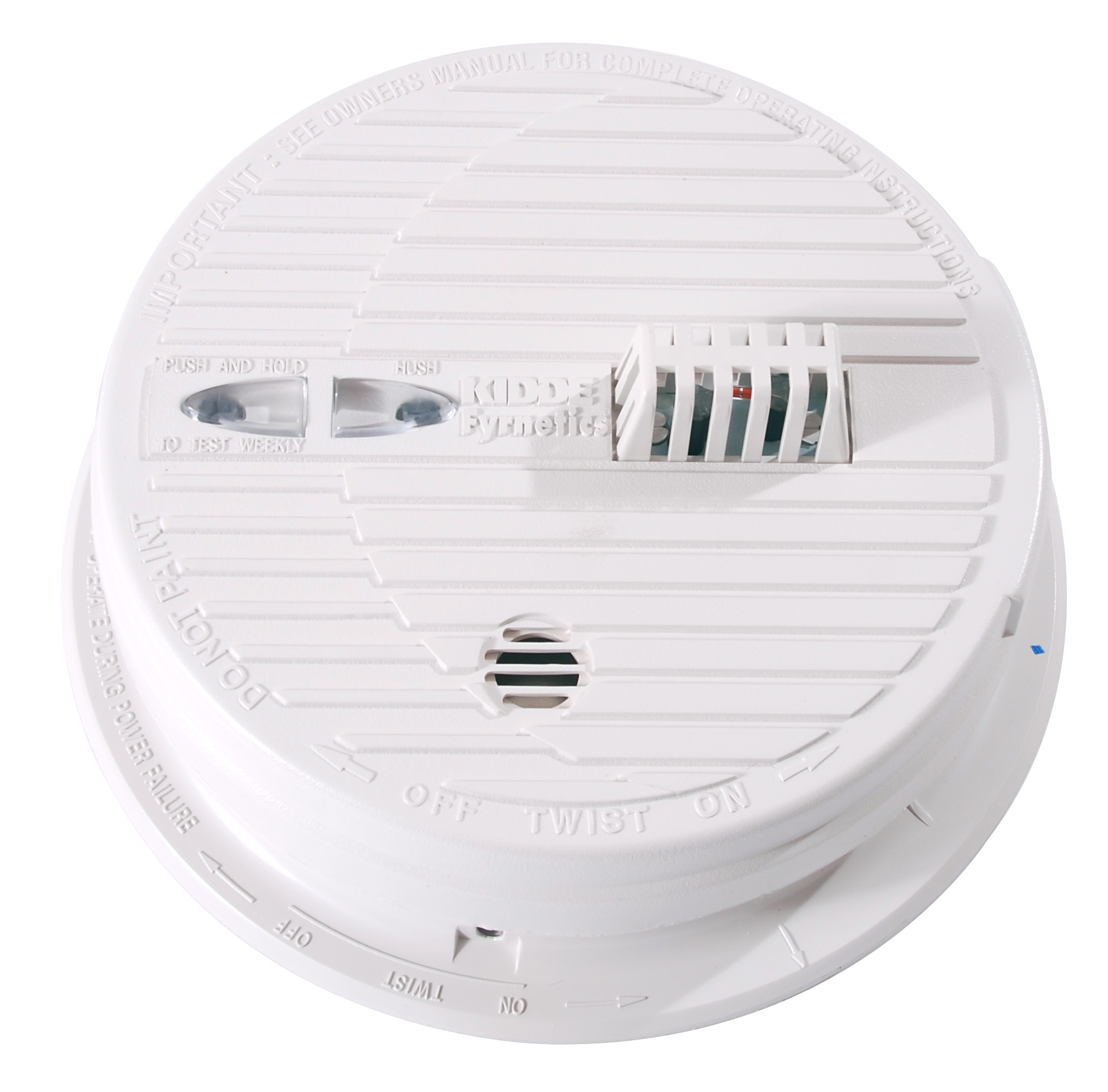
Fire AlarmWhen it comes to keeping your family safe from fire, your first line of defense is an effective – and functioning – fire alarm.

Smoke Detectors: Pull Your Finger Out!

As the recent campaign fronted by Julie Walters showed, a smoke detector without a battery is as useful as a bicycle for a haddock. In fact, it’s worse than useless, because it can lull you into a false sense of security. Luckily, the new generation of 10-year battery alarms and mains alarms take away that worry, and they are surprisingly cheap too.

Not all Smoke Alarms are Equal

There are three main types of alarm that can protect you and your home:

1. An ionisation smoke alarm detects fires that burn fast and with flames, such as furniture or fabrics. So, you should place these types of smoke detectors in your lounge and bedrooms, but NOT next to an en-suite bathroom. (Learn why a little later.)

If this alarm alerts you to a fire, the best extinguisher to have handy would be a 2kg domestic multi-rating ABC powder extinguisher.

2. A photoelectrical or optical smoke alarm detects smouldering or slow-burning fires that give off smoke and ash, rather than burst into flames. This is the best type of alarm to have near a kitchen or bathroom door, as they are not set off by steam or cooking particles. Place them in your hallway or landing, or anywhere near a bathroom door.

Again, make sure you also have easy access to a domestic-sized fire extinguisher upstairs, to save precious seconds running downstairs to fetch one.

3. A mains heat alarm only activates if the temperature rises above 57 degrees C (135 degrees F), so they are ideal for use in your kitchen. They are ideal as they won’t go off every time you fry or overcook a cake, but will alert you to a more serious incident.

Your kitchen fire safety kit should consist of at least a wall-mounted fire blanket and a multi-rated domestic fire extinguisher. If you have a lot of electrical equipment in your kitchen, you might like to also consider a CO2 fire extinguisher, to minimise damage to your expensive fridge or mixer!

Tackling Home Fires with a Fire Extinguisher

When your smoke detector alerts you and your family to a fire, always get the family outside first. If you consider the fire to be small enough to tackle with your fire extinguisher, do so, but don’t be a hero.

If in doubt, always get out, stay out and call the Fire Brigade.

Fire Safety In Your Kitchen

September 9, 2008 by  
Filed under Fire Safety at Home

Fire BlanketSo, you’ve got 10 year battery smoke alarms on the ceilings and a small fire extinguisher on each floor of your home. So, that’s you sorted, right?

Wrong! The US National Fire Protection Association discovered that in the past 10 years, more than 15 percent of all residential fire deaths, more than 29 percent of all injuries and approximately 30 percent of all residential fires were the direct result of kitchen fires. In the UK, 376 people died in domestic fires in 2005, and over 11,500 people were injured.

Protect Your Kitchen, Protect Your Home

Kitchen fire safety remains a concern for UK authorities. The latest Code of Practice BS 5839-6:2004 recommends a heat alarm in every Kitchen, and new Building regulations require new homes to have mains operated alarms. Yet, there is no requirement to fit any fire detection alarms in your existing kitchen.

Fire Safety: Kit Out Your Kitchen

Providing fire safety for your kitchen is really easy – and remarkably cost-efficient too, with just three steps to fire safety.

1. Feel the Heat


If you love to cook, you’ll know how a kitchen can quickly fill with steam, or hazy smoke from that lovely sizzling steak. Normal smoke alarms would be going crazy by now, which is why most new kitchen are fitted with a heat alarm instead.

A heat alarm only sounds when the temperature rises above 57 degrees C (135 degrees F), the temperature of a fire rather than just cooking.

2. Smother with Love

A fire blanket is just what you need to smother small fat fires in a frying pan, for example. Fire blankets work by excluding air from the fire, and extinguishing it.

If a pan catches fire, turn off the heat and immediately throw the blanket completely over the pan.

DO NOT MOVE THE PAN!

3. Fight the Fire

Your third essential item of kitchen fire safety kit is a 2k domestic fire extinguisher, such as an ABC multi-rated power extinguisher. This extinguisher is ideal for tackling fires NOT involving fats or electrics, such as a burning tea-towel or paper packaging.

Mount your handy fire extinguisher on a wall, so it’s easy to grab and use if and when you need it. If you have expensive electrical equipment in your kitchen, invest in a CO2 fire extinguisher as well, which will reduce any potential damage when sued on or near your electrical appliances.

So, keep safe in your kitchen this year, and may the only smoke be from your partner burning the toast – again.

Fire Extinguisher Signs

September 9, 2008 by  
Filed under Fire Safety for Business

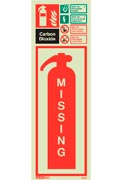
Fire Extinguisher SignsYou may have the best quality, shiniest fire extinguishers in your business premises, but they will only be effective if your staff can find them when they need them most! Fire safety equipment signs are a vital part of your fire safety provision for your office, factory, warehouse, hotel, shop, or outdoor site.

Fire Safety Signs: What the Law Says

Health and Safety regulations require all owners of premises to use safety signs, quote, “Where there is a significant risk to health and safety that has not been avoided or controlled by the methods required under other relevant law, provided the use of a sign can help reduce the risk.”

All signs also need to conform to the British Standard Code of Practice for safety signs (BS 5499-10:2006)

Seeing Red: Fire Extinguisher Safety Signs

All fire equipment signs feature a red background with white graphics. These familiar red signs indicate where you and your colleagues can find fire extinguishers and other firefighting equipment, such as fire hoses or breathing apparatus.

 Fire extinguisher signs often combine vital information for users on one easy-to read sign. For example, a combination sign might include:

  • a red fire equipment sign for an extinguisher at the top
  • a blue information sign detailing the extinguisher type
  • green information symbols indicating the types of fire the extinguisher can be used on

So, your fire extinguisher sign can be a ‘one-stop shop’ of vital information in an emergency. Now you need to ensure everyone can see it!

Fire Safety Sign Placement

Placing your signs in the right places can give you staff vital extra seconds in an emergency. Make sure that every fire extinguisher has an appropriate sign not just at extinguisher level, but at eye level as well. Remember that not everyone is the same height, so eye level for some is sky level for others! Also consider the needs of any disabled members of staff, whose eye-line may be different again.

Always place your fire extinguishers where they can easily be accessed, and their associated fire safety sign can be seen at all times, so don’t site them behind a door or near a coat rack, for example.

If you have new premises or are renovating your old offices, your local Fire Officer or a professional fire risk assessor will be happy to help with advice on correct and effective placement.

Fire Extinguisher Stands and Signs

Despite modern advances in technology, fire extinguishers are still heavy items. Modern office partition walls and old brick walls in older premises may not be robust enough to support the weight of an extinguisher mounted on the wall. A better option is a fire extinguisher stand , which also protects your fire extinguishers from accidental knocks.

These red, grey or cream rigid plastic floor stands give your extinguishers a safe and sturdy home, and protect your carpets too! For external use, tough steel frame Fire Point stands are also available.

Walking Fire Extinguishers: Do They Exist?

From the number of times office fire extinguishers seem to move from their original positions to prop open doors, etc, you might be forgiven for thinking they had legs! Fire extinguisher signs can help you instantly identify any gaps, as some designs feature a “Missing” graphic.

Simply place your extinguisher in front of the graphic, and if the extinguisher is subsequently moved, you’ll see “Missing” in large letters.

Fire Extinguisher Training: if at first you don’t succeed

September 9, 2008 by  
Filed under In the News

Fire Extinguisher TrainingIt takes a particularly patience US Fire Chief to be called out to the same location eight times since May 2008, and state that “Every time we go out, we can learn from that. Each time is a training experience.”

Fire Chief Mike Kobel’s patch is the Eastern Prairie district of Champaign, Illinois, and his particular bétè noir is a disused grain elevator, just across the street from his fire station.

The old grain elevator and the silos are being reclaimed by crews of contractors, and this process is when Chief Kobel’s problems started. Kobel was quoted in the local News Gazette, explaining that when the crews use cutting torches to remove parts, the flames ignite remnants of grain, their oils, and grain dusts, resulting in the smoldering fires.

Kobel is also resigned to the particular problems of fires involving dried organic produce: “Last week, we put several hundred gallons on one area. We knocked it down and the smoke quit. Rest assured, when you’re dealing with a pile of grain, it’s going to start smoking again.”

Site owner Chris Knipfer told the newspaper that he often doesn’t even know about fires at the grain elevator until the fire engine arrives, as the alarm has been raised by drivers on the nearby interstate highway, spotting smoke.

Chief Kobel is certainly using the grain elevator fires as an excellent source of training for his volunteer force of firefighters – and the contractors. He has instructed all contractors on site to put out smaller fires using fire extinguishers, whilst his crew make the most of each incident as training for a potentially major emergency.

For example, when their fire truck was called to a recent incident at the grain silos, the firefighters decided to check if their ladder would be long enough to reach the top of the silo if a fire broke out there. It wasn’t. So, if your company exports 140 foot long fire ladders to the US, you know who to call.